
As we have said and written countless times over the years, Heritage Trusts have few, if any, downsides. Instead of beneficiaries receiving their inheritance directly in their name (thus “owning” it outright), each beneficiary receives their inheritance wrapped in a Heritage Trust that springs into action after the Trustor of the original living trust passes away. In an instant, the beneficiary can use and control the inherited assets inside it—virtually giving them the same rights as outright ownership.
More importantly, they benefit from added protection against outside threats such as creditors, unforeseen lawsuits, divorce, et cetera. While that sounds like a great deal, like any estate planning tool, a Heritage Trust must be created and managed carefully.
Simply put, there are smart ways to use a Heritage Trust—and there are not-so-smart ways that can undermine everything.
The Do’s and Don’ts of a Heritage Trust
To keep things simple, here is a basic list of do’s and don’ts you should follow to properly enjoy all the benefits of your Heritage Trust.
Do the following:
- Take your role and responsibility as beneficiary seriously — The Heritage Trust is sometimes referred to as a “beneficiary-controlled trust,” which can make it seem that you have the freedom to do pretty much anything you wish. While this is fairly true, you should take your duties, powers, and liabilities seriously. The more you focus on properly fulfilling your dual role as Trustee in operating the Heritage Trust, the greater benefits you will see as the beneficiary.
- Seek guidance and advice from a qualified attorney — Not just an attorney, but also an accountant, financial advisor, real estate manager, etc. You can hire these professionals and pay for the reasonable cost of their services from the Heritage Trust.
- Treat the Heritage Trust as a separate entity — The Heritage Trust should hold title to your inherited assets, and transactions should be run through its own accounts. It should have its own taxpayer identification number, keep track of its income and expenses, and file its own income tax returns. If you serve as your own Trustee, sign all transactions as “as Trustee.”
- Be careful about how and when you take withdrawals — As a beneficiary, you may use the Trust’s “hard” assets (such as residing on a piece of real estate or using a car or jewelry) without removing such assets from the Heritage Trust or paying rent or other compensation. Keeping “hard” assets in the Heritage Trust helps maintain the protective “wrapper” around them. “Liquid” assets of the Heritage Trust (such as cash, certificates of deposit, money market accounts and mutual funds) should be viewed as your “rainy day money” and not routinely withdrawn, distributed or applied to pay your personal living expenses.
- Document your decisions and actions — Act responsibly, maintain records of major decisions made, and document why you made them (such as investment purchases and sales, and distributions to you).
- Document all meetings and calls with advisors — This may prove useful later if anyone ever questions your decisions or actions.
- Keep in mind that it is better to act slowly, prudently, and conservatively — Do not make quick or impulsive decisions without fully considering the pros and cons. Again, seek professional advice if necessary for your peace of mind.
Do Not Do the Following:
- Don’t commingle Trust and personal assets
- Don’t regularly withdraw similar amounts
- Don’t take loans from the Heritage Trust and fail to make payments
- Don’t deal with an attorney representing someone else
- Don’t procrastinate
- Don’t ignore calls, emails, and other correspondence from third parties
- Don’t act alone if there are other co-trustees
- Don’t give up when operating the Heritage Trust feels too overwhelming
Call Leigh Hilton PLLC Today!
At Leigh Hilton, PLLC, we want to be the resource in your back pocket and the voice in your ear who helps you be the hero that you are. Please call us so we can help ensure your family is taken care of in the best way possible. Proper estate planning, whether through a will, trust, or both, helps ensure your family is cared for.
Leigh Hilton PLLC wants to be your first call every time for any estate planning need. We look forward to serving you.
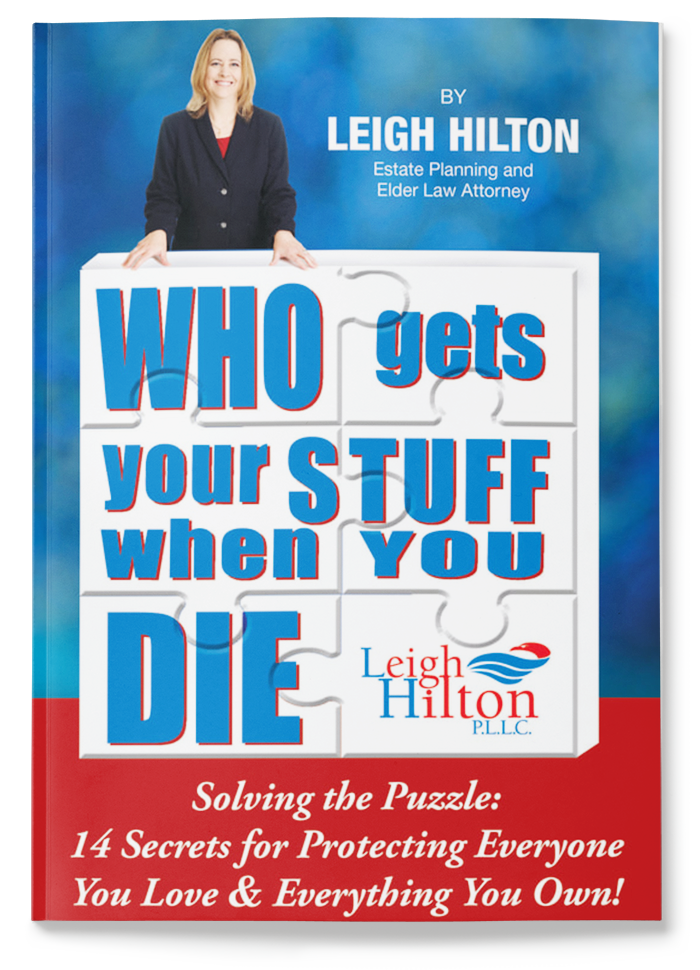
Register Here to get a Free Copy of Leigh's book, "Who Gets Your Stuff When You Die"
Office Hours
Monday: 8:30am - 5pmTuesday: 8:30am - 5pm
Wednesday: 8:30am - 5pm
Thursday: 8:30am - 5pm
Friday: 8:30am - 5pm
Denton
Aubrey
Bartonville

FOLLOW US ON:


